Review: Malcolm from Sheffield, England
Malcolm, a novice sailor from Sheffield, transitioned from paddle sports to dinghy sailing last May. He purchased a Tiwal 3 with a reefable sail and found it to be the perfect, safe learning platform. Unlike traditional boats whose heavy booms previously injured him, the Tiwal offers a lightweight, high-clearance design.
Its exceptional portability allows him to pack it easily into his camper van or small 4×4 for adventures across local reservoirs and European lakes. Ultimately, Malcolm loves its responsive handling and the thrilling flow of hiking out on the rails.
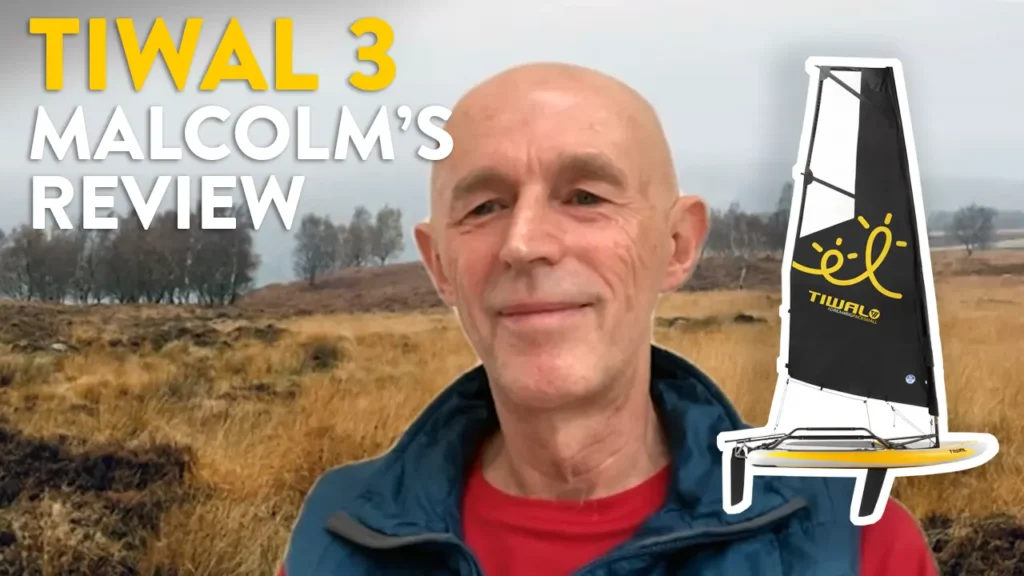
My name is Malcolm, and I live in Sheffield in England.
Which Tiwal model do you have?
I have the Tiwal 3, which I bought just over five months ago, so not very long, and I have the reefable sail.
Where do you sail?
I’ve actually been sailing since May 25 last year, and I started with a small sailing club in a very small reservoir. It’s less than half a square kilometer, so very small, just sailing dinghies on there, no keelboats. And that was my first experience last year of sailing at all. Prior to that, I’d been sea kayaking and also doing a lot of stand-up paddleboarding, but I’d never sailed before, so I had a lot to learn in terms of the practice of sailing from nowhere, really.
And from there, I’ve then progressed into another sailing club which is about 50 minutes from me, and their reservoir is much bigger. And then also now, in September last year, I went to Bavaria, and I sailed on the Bodensee there, Lake Constance, which is about 200 square miles, so much bigger.
In terms of conditions, I’ve sailed in everything from barely moving —in fact, I had to get the paddle out to get back in again— to peaking at 15 or 20 knots where the boat has been flying, which has been absolutely brilliant. And in all weathers as well. I’ve been out in the rain. I was out sailing two weeks ago when it was minus two degrees at the sailing club. I’m used to being out in the mountains and hill walking, so it’s just a question of wearing the right clothes. I just have lots of thermal layers on, a dry suit, gloves, and a hat, and I’m happy getting out in anything as long as it’s not going to destroy the boat and myself.
What was your experience before Tiwal?
So I got my Tiwal in August last year, so I’d been sailing for about three or four months on different boats at the club, mainly the Pico. And one of the things I love about the Tiwal is it feels very safe. When I was on the Pico once, I made some kind of error, and the boom, which is quite a heavy metal boom, just cracked me on the side of the head. I was completely stunned, and I had to get the safety boat to come over and tow me in because I had had enough at that point.
On the Tiwal, the boom is so light, and it’s also quite high up, so it’s never hit me on the head. That makes it feel very safe. Even when I’m gybing, and the sail is moving very quickly back and forth, it feels very safe compared to some of the conventional boats that I’d sailed at the club.
How do you use your Tiwal?
At the club I tack on to the end of the races and they’re all on fast racing boats. But I just try and get my way around the course just to improve my skills and try and work out the points of sail and where the wind is coming from. So I just really enjoy being on the boat, and when that boat comes alive, it makes me feel alive, so it’s a really good experience.
How is it going so far?
I’m really happy! It’s the combination of the boat and learning to sail at the same time. I love the whole process of feeling the movement through the boat, moving my body around on the boat, and sensing where the wind is coming from. I just find, as a platform, that the Tiwal is perfect for me because it’s very comfortable to move around on. Compared to a conventional boat, which can have very hard surfaces and corners, the Tiwal is just very comfortable to move around on.
And when it does go over, I’ve capsized it a couple times, it’s been easy to get it back upright again. It’s very light compared to a conventional boat. So I’m really looking forward to exploring, developing my skills, exploring more places, and having more adventures on it.
What characteristics surprised you?
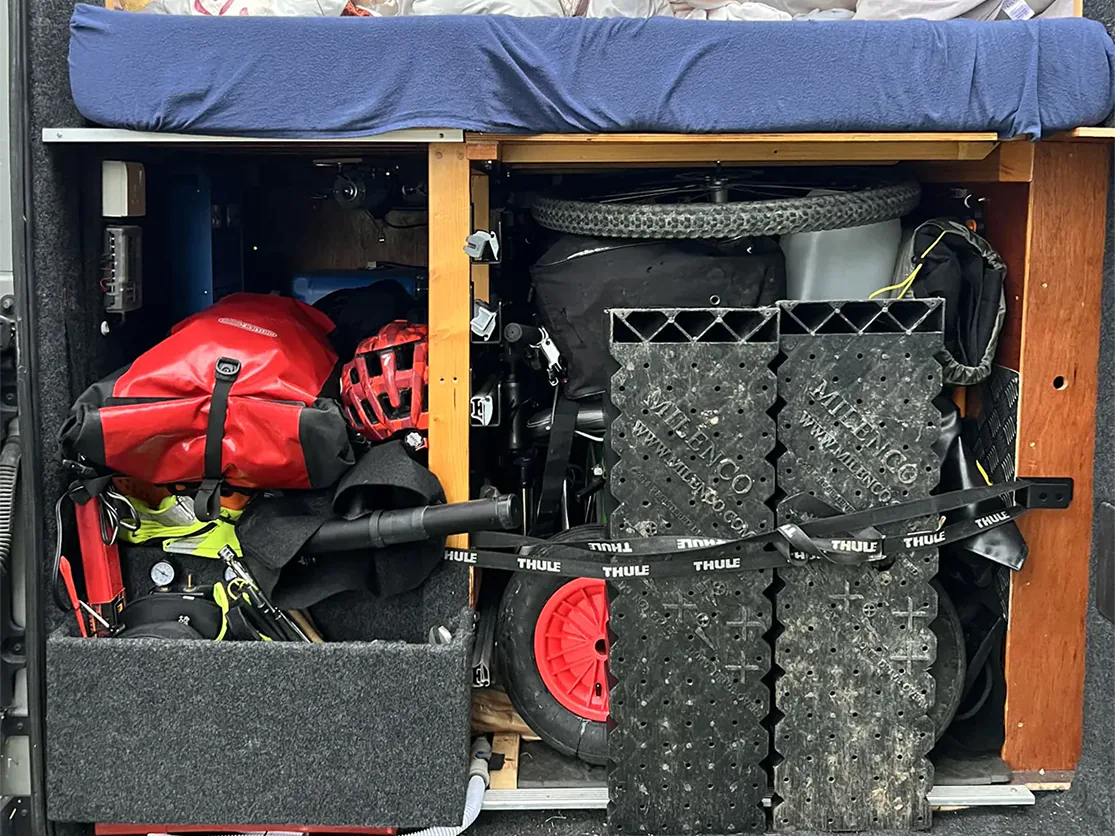
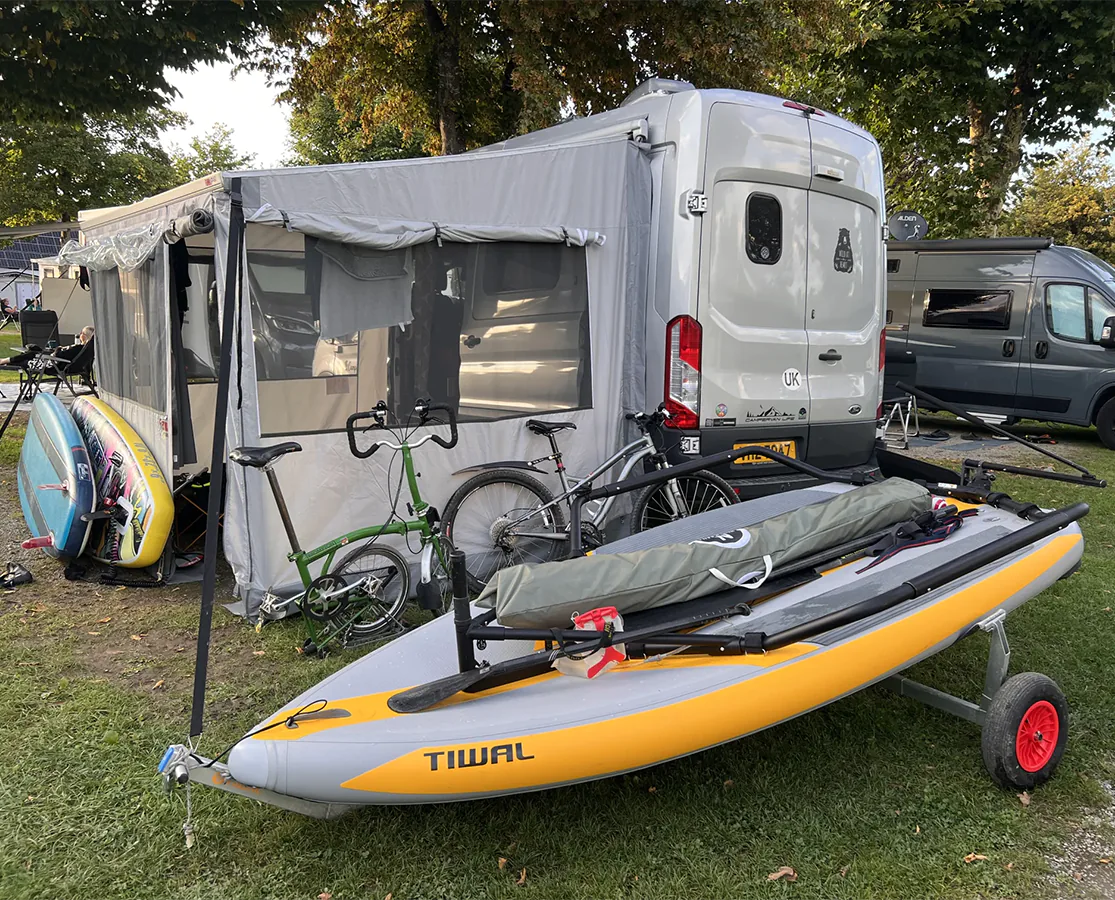
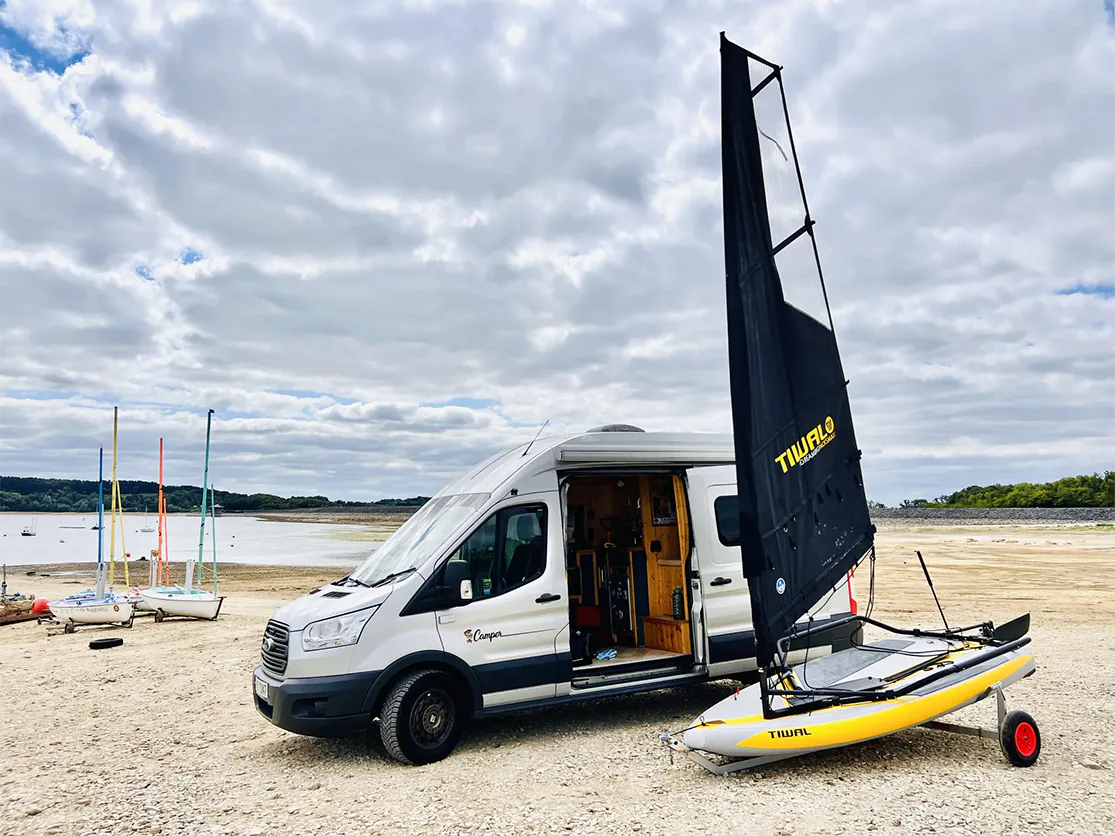
It’s a good question because I actually researched the boat so much that there probably wasn’t anything that surprised me that much because I’d read and watched loads of videos about it. People talk about the maneuverability and the responsiveness of it, which I think is great. The portability is really fantastic for me. That’s the key thing because when I travel, I’ve got my camper van, which is a three and a half ton transit van which I built myself, and under the bed I can get my Tiwal, a couple of bicycles, and a couple of paddleboards. I can just fill it full of stuff, and then, as I said, this year I went to Germany and sailed on a whole bunch of different lakes.
In terms of what surprised me, it was actually more people at the club. One of the guys I was talking to is nearly 80 years old, and he’s been sailing competitively since the 1960s, building boats and selling boats, so he really knows his way around boats. He was saying he could see where the money had gone with the Tiwal in terms of the design and the quality of the materials. It gets a lot of curiosity at the club. People literally come and poke it because they want to see how rigid it is, and they’re surprised that it is such a rigid boat. They’re expecting an inflatable paddling pool or something. But when they see it, a lot of people have been very impressed with it, which is really nice.
How do you store your Tiwal?
I keep it in my garage normally when it’s at home or otherwise it’ll be under the bed in my camper van. But actually, when I go to the sailing club, which is close by, it’s a very small car park with overhanging trees, so I can’t get the van in there. I’ve got a small Fiat Panda 4×4, and it’ll actually fit in there as well, which is fantastic. So in terms of flexibility of transport, it’s brilliant.
What is your best memory with your Tiwal?
When I’m flying, as I call it. One of my best moments actually was the first time I ever hiked out on the rails. I’d been a bit nervous about doing that, and then eventually I just went for it, and it felt really comfortable. I was surprised how comfortable it was.
Once I was leaning back, the boat was really moving and shifting with the wind. It actually gets louder, the sound of the water rushing over the rudder. The noise increases, and it just feels like I’m in flow with the boat and the wind. It’s a really lovely experience.