Can I right a sailing dinghy by myself after a capsize?
Yes, it’s absolutely possible to right most sailing dinghies by yourself. And Tiwal sailing dinghies are even easier to right.
Capsizing is part of dinghy sailing. Although righting your boat after capsizing can be a difficult exercise on some dinghies, this isn’t the case with a Tiwal. True to our philosophy of designing boats that make sailing accessible, we have made sure that they remain easy to right by just one person, even those of small stature!
The proof is in the pictures: we’ve made videos showing how easy it is to right your Tiwal dinghy.
Righting a Tiwal3 sailing dinghy
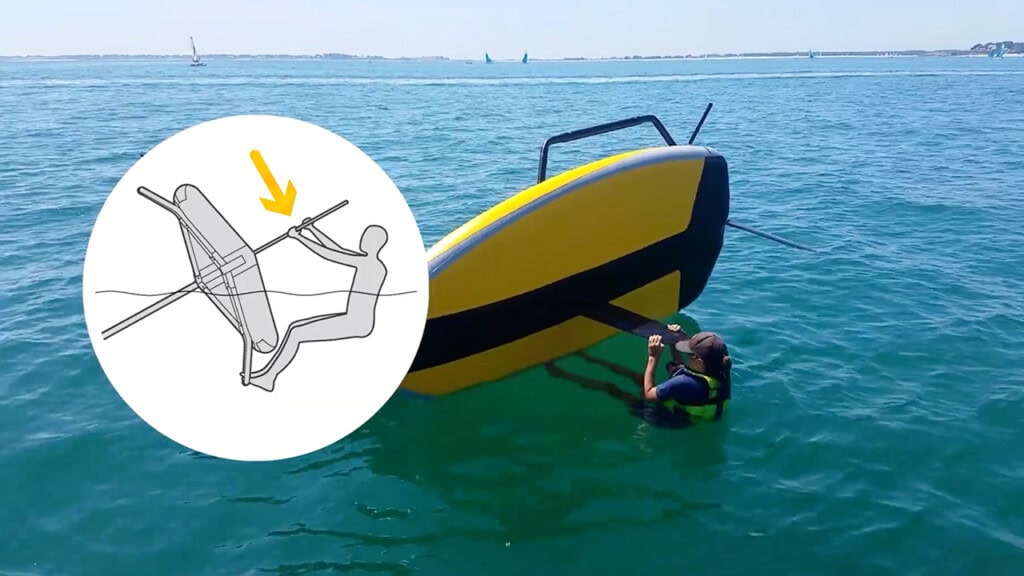
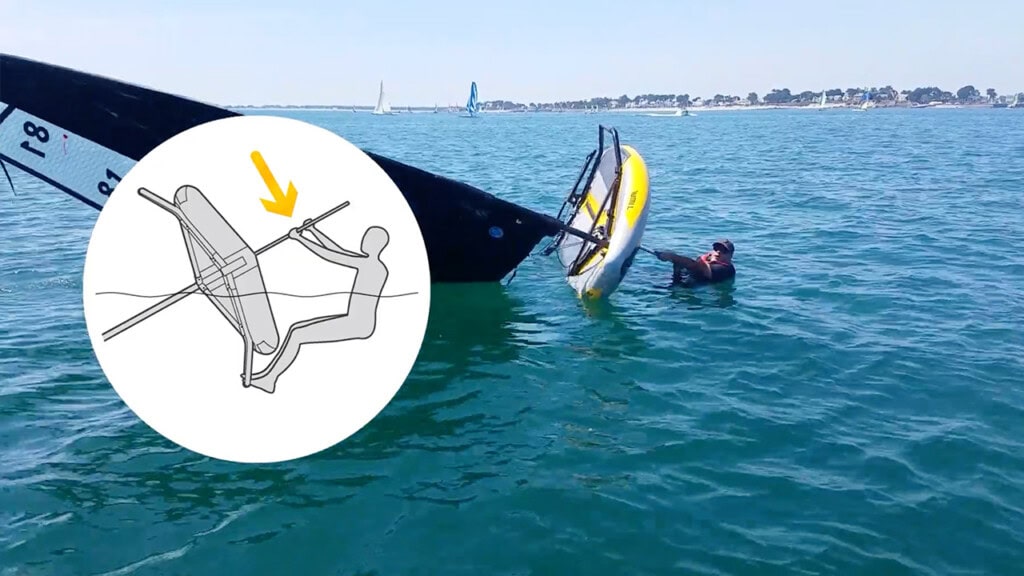
Position yourself upwind of the overturned hull (ie. between the wind and the boat). Put your feet on the wings while holding onto the daggerboard with your shoulders well-back, in order to exert maximum righting moment. When the mast returns to the horizontal position, the maneuver slows down, because before you can lift the sail up out of the water, you’ve first got to wait for it to gently empty. A little patience and the boat will slowly come back upright.
All you have to do is climb back on board, always from the front of the hull, to keep the boat head to wind.
Be careful: if you board from the stern, the dinghy could end up facing downwind, and therefore drag you along, with the risk of capsizing again.
Righting a Tiwal 2 sailing dinghy
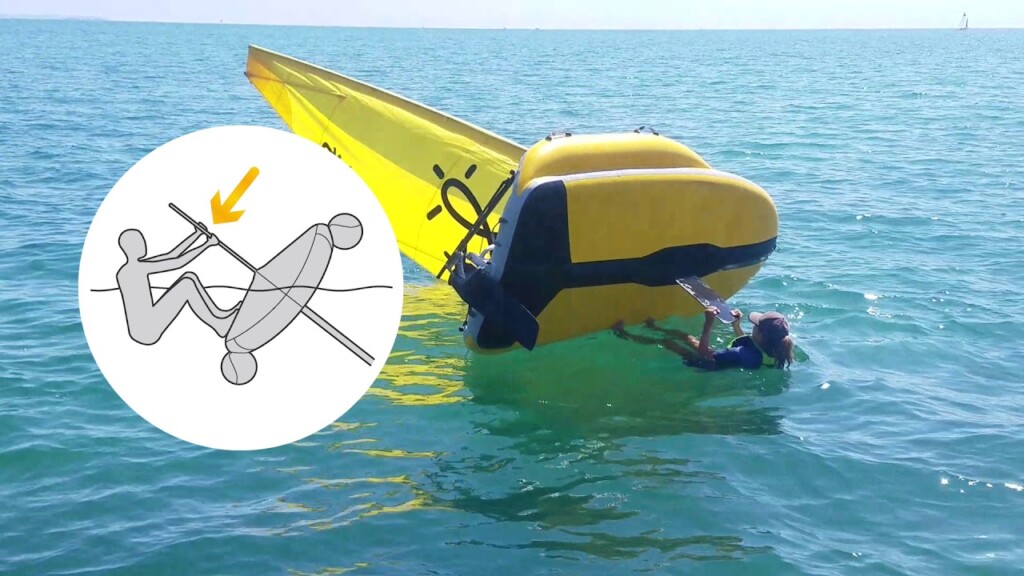
It’s even easier on a Tiwal 2 or 2L!
The captain kneels down on the windward wing and then stands, holding onto the daggerboard halfway up.
Finally, be careful to apply your force on the hull and the wings rather than on the daggerboard, which should only serve to hold on to.
Righting techniques for smaller crew
These techniques work for a captain who weighs at least 110 lbs. Below this weight, or under strong wind conditions, it’s difficult to create a sufficient counterbalance. But rest assured, all is not lost!
Right up the boat with the help of the painter
A painter is a rope that is attached to the bow of a dinghy, or other small boat, and used for tying up or towing.
Rather than taking the daggerboard in hand, pass the painter up and over the wing, and thus move further away from the hull to exert a greater righting moment.
Tiwal 2XL: Because of the length and width of its hull, this boat requires two people to right it, especially in strong winds. In this situation, one person holds the boat at the bow and keeps it facing into the wind. The second person then rights the boat as explained above.
Adding recovery lines: a simple and effective solution
The easiest solution is to add one or two lines that remain accessible when the boat is upside down:
Tiwal 2 and Tiwal 2L
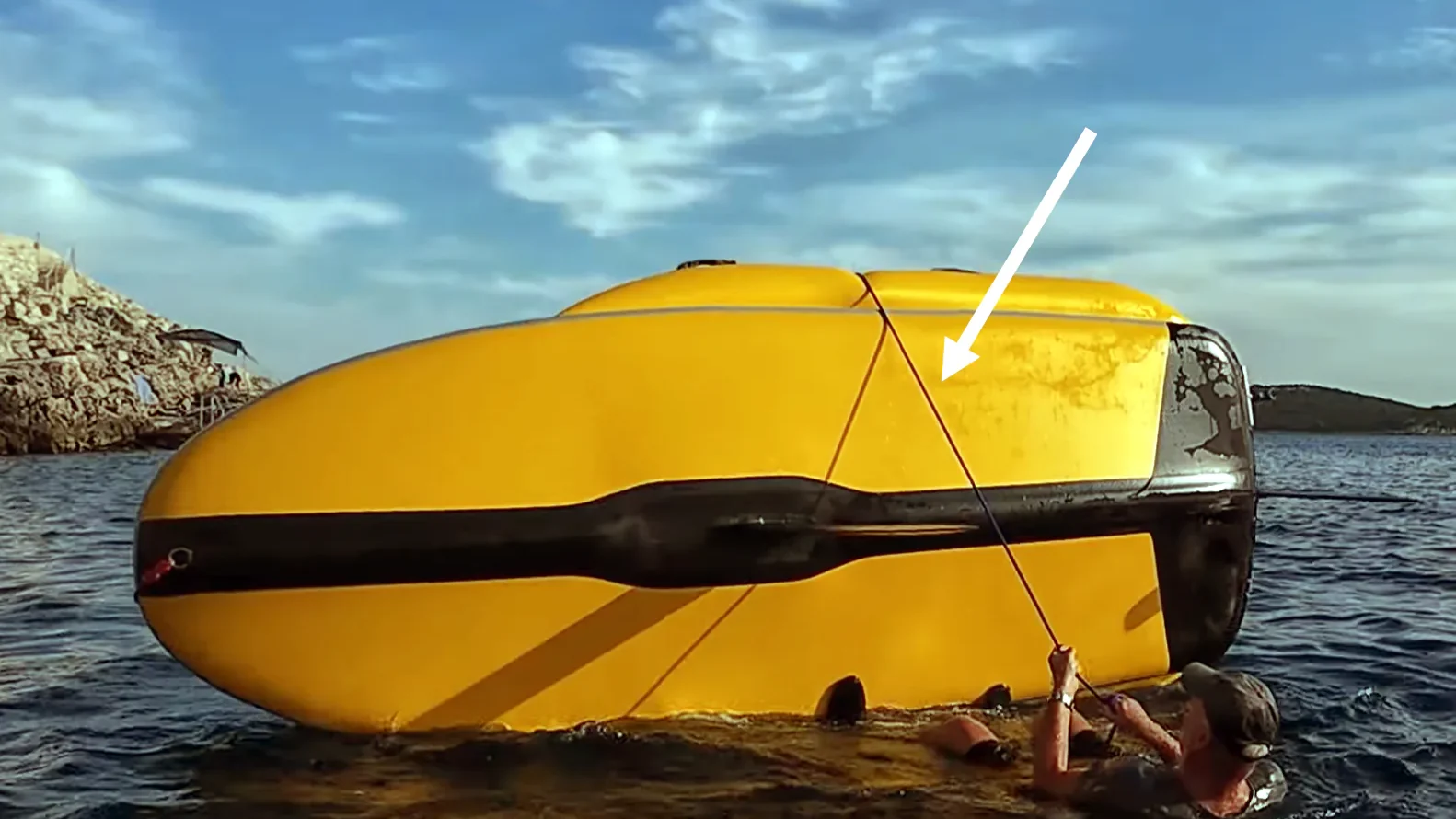
Attach a single, fairly long line to the daggerboard trunk, using the same attachment point as the daggerboard retaining shock cord.
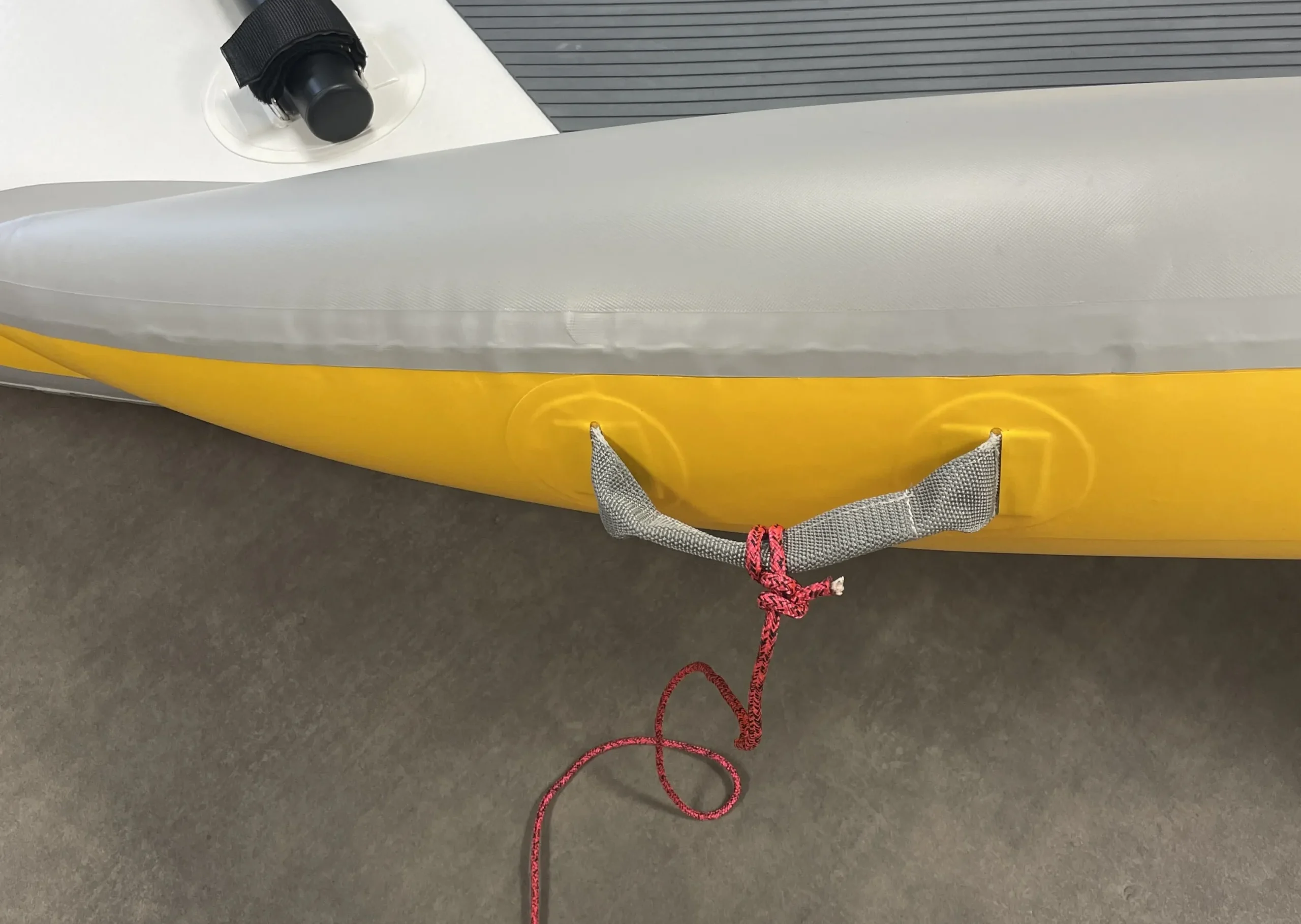
Another option is to attach two shorter lines to the webbing handles located along each side of the boat, at the level of the daggerboard trunk. To prevent premature wear on the webbing handle, secure the line with a round turn and two half hitches.
Tiwal 3, Tiwal 3R and Tiwal 3R Max
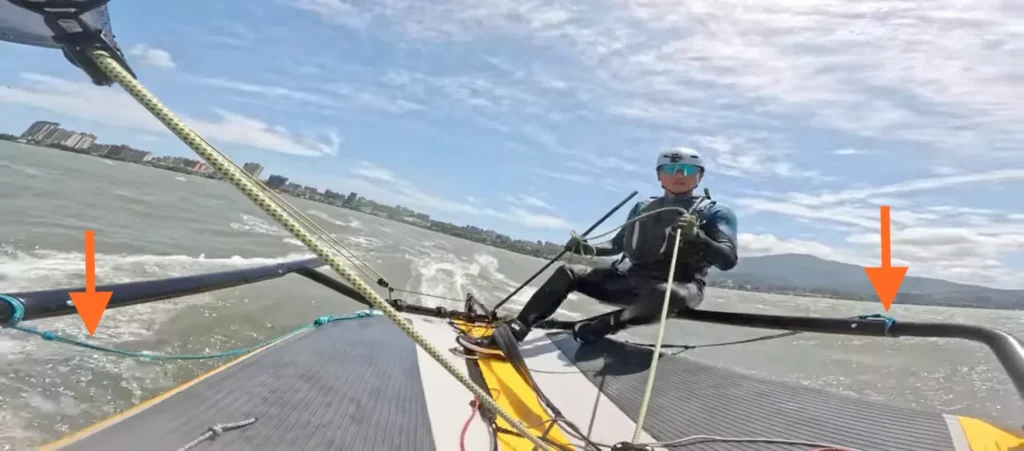
Two recovery lines can be attached on each wing at the level of the daggerboard trunk, providing an easy grip point from either side of the boat after a capsize.
For all models, use a line with enough weight and length to allow you to throw it over the wing if it falls on the inside of the boat during the capsize. Adding a small plastic ball or a stopper knot at the end of the line helps increase the weight of the end of the rope and makes it easier to throw and grab.
This recovery-line solution has already been tested and validated by several Tiwal owners, on various models, with very positive feedback.
What about adding grab handles under the hull?
Another possible solution is to glue PVC grab handles underneath the hull, on each side of the daggerboard. This creates a very direct handhold when the boat is inverted.
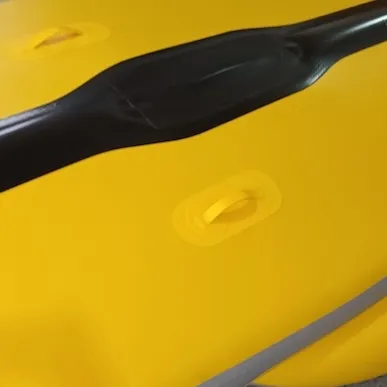
This is the solution we selected for the Tiwal 2XL. Because of its wider hull, the daggerboard is positioned higher above the water when the boat is upside down, making these handles easier to reach and practical for this larger model.
However, adding PVC handles under the hull can affect the water flow underneath the boat and may have an impact on sailing performance. For this reason, we recommend the recovery-line solution rather than permanent underwater handles on other models.
Sailing tip
The best technique is still to react quickly after a capsize and grab the daggerboard before the boat becomes completely inverted. A recovery line is an additional safety feature that makes the process easier, especially when conditions make the maneuver more difficult.